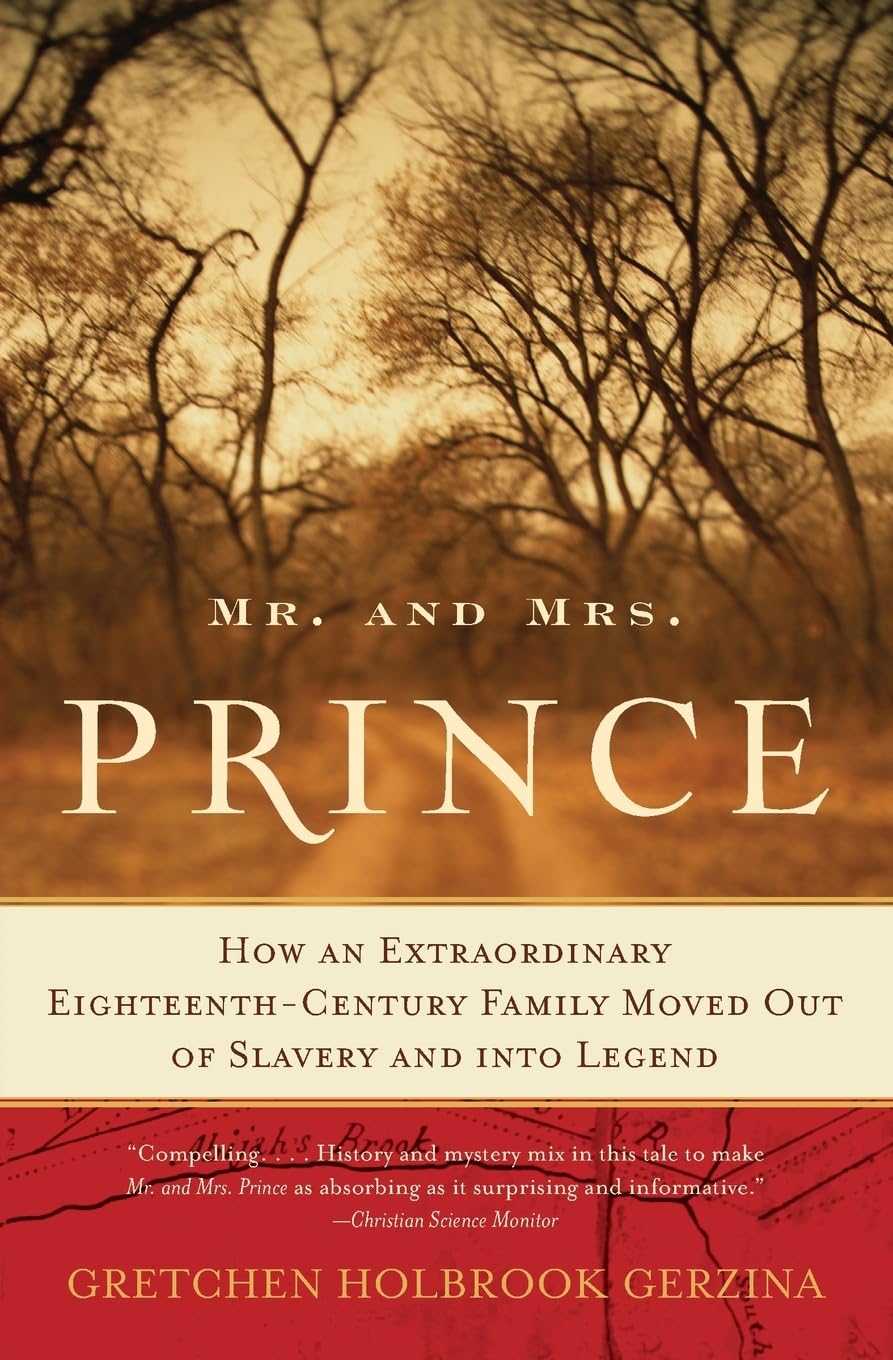
Merging comprehensive research and grand storytelling, Mr. and Mrs. Prince reveals the true story of a remarkable pre-Civil War African-American family, as well as the challenges that faced African-Americans who lived in the North versus the slaves who lived in the South. Lucy Terry, a devoted wife and mother, was the first known African-American poet and Abijah Prince, her husband, was a veteran of the French and Indian wars and an entrepreneur. Together they pursued what would become the cornerstone of the American dream—having a family and owning property where they could live, grow, and prosper. Owning land in both Vermont and Massachusetts, they were well on their way to settling in when bigoted neighbors tried to run them off. Rather than fleeing, they asserted their rights, as they would do many times, in court. Here is a story that not only demonstrates the contours of slavery in New England but also unravels the most complete history of a pre-Civil War black family known to exist. Illuminating and inspiring, Mr. and Mrs. Prince uncovers the lives of those who could have been forgotten and brings to light a history that has intrigued but eluded many until now. “A moving. . .portrait of a striving family.” - New York Times Book Review “[Mr. & Mrs. Prince] tells more than just a personal story it sheds light on a piece of early American history not often discussed.” - USA Today “Moving, thorough, and intelligent. A rare blend of scholarship and compelling narrative.” - Toni Morrison Merging comprehensive research and grand storytelling, Mr. and Mrs. Prince reveals the true story of a remarkable pre-Civil War African-American family, as well as the challenges that faced African-Americans who lived in the North versus the slaves who lived in the South. Lucy Terry, a devoted wife and mother, was the first known African-American poet and Abijah Prince, her husband, was a veteran of the French and Indian wars and an entrepreneur. Together they pursued what would become the cornerstone of the American dream—having a family and owning property where they could live, grow, and prosper. Owning land in both Vermont and Massachusetts, they were well on their way to settling in when bigoted neighbors tried to run them off. Rather than fleeing, they asserted their rights, as they would do many times, in court. Here is a story that not only demonstrates the contours of slavery in New England but also unravels the most complete history of a pre-Civil War black family known to exist. Illuminating and inspiring, Mr. and Mrs. Prince uncovers the lives of those who could have been forgotten and brings to light a history that has intrigued but eluded many until now. Gretchen Holbrook Gerzina is the author and editor of several books, including Carrington ; Black London (a New York Times notable book); Black Victorians , Black Victoriana ; Frances Hodgson Burnett ; and others. She is the Kathe Tappe Vernon Professor in Biography at Dartmouth College, where she also chairs the English Department, the first African-American woman to do so in the Ivy League. She has won grants from Fulbright and the National Endowment for Humanities and hosts The Book Show , a nationally syndicated weekly radio program that airs on ninety stations across the country, interviewing current authors of literary fiction, biography, and history. Mr. and Mrs. Prince How an Extraordinary Eighteenth-Century Family Moved Out of Slavery and into Legend By Gretchen Gerzina HarperCollins Publishers, Inc. Copyright © 2010 Gretchen Gerzina All right reserved. ISBN: 9780060510749 Chapter One The Attack On Tuesday, October 4, 1785, half a dozen men, later described by the courts as a "mob," armed themselves with clubs and crashed through a farm gate and into the Guilford, Vermont, house of Abijah and Lucy Prince. Several of the attackers had wrangled with the Princes in court on and off over small debts and trumped up transgressions. For months, financed and encouraged by the Princes’ nearest neighbor, they hounded the former slaves, but the elderly Bijah and Lucy not only refused to be intimidated but responded to every assault with defiance. Only five months before, Lucy had left behind her eighty-year-old husband to guard the house while she traveled north to take their complaints to the highest governing body of the independent republic of Vermont, and she powerfully impressed the Governor and Council with the first speech they had ever heard by an African American. She returned with an order of protection, but it had no effect against the thugs who were now breaking down her door. They made their way inside, brutally beating the Princes’ hired man, a mulatto. Bijah and Lucy escaped harm, but the attackers set fire to their hayrick as they raced off. No hay could mean no food throughout the coming winter for the livestock, and therefore no food for themselves, or transportation, or way to make a living. It