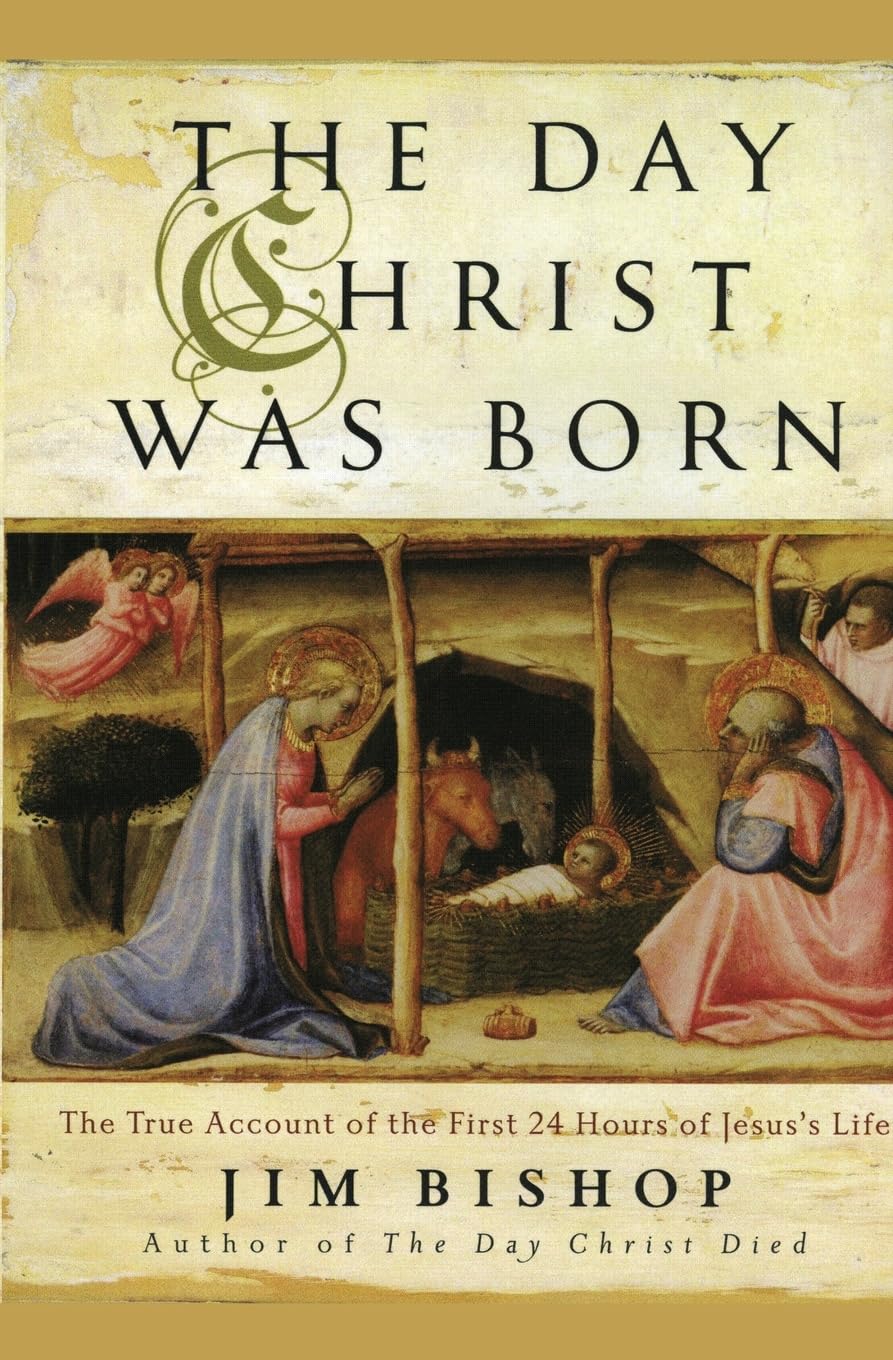
A reissue of the classic retelling of the Nativity. "Written with dignity, unerring taste, and with no straining for effects."-- Chicago Sunday Tribune “Written with dignity, unerring taste, and with no straining for effects.” - Chicago Sunday Tribune “Should give all segments of Christianity a fresh appreciation of Christmas.” - Denver Post A reissue of the classic retelling of the Nativity. "Written with dignity, unerring taste, and with no straining for effects."-- Chicago Sunday Tribune A reissue of the classic retelling of the Nativity. "Written with dignity, unerring taste, and with no straining for effects."-- Chicago Sunday Tribune Jim Bishop was a syndicated columnist and author of many bestselling books, including The Day Lincoln Was Shot , The Day Christ Died , and A Day in the Life of President Kennedy . Born in Jersey City, New Jersey, Bishop died in 1987. The Day Christ Was Born The True Account of the First 24 Hours of Jesus's Life By Bishop, Jim HarperSanFrancisco ISBN: 0060607947 Chapter One The road out of bethany threw a tawny girdlearound the hill they called the Mount of Olives and the littleparties came up slowly out of the east leading asses withdainty dark feet toward the splendor of Jerusalem. Theycame up all year long from Jericho and the Salt Sea and theMountains of Moab and the north country of Samaria andGalilee in a never-ending procession to the Temple of Herodthe Great. It was a spiritual spawning; a coming home; acommunion with God at his appointed house. Joseph had never seen such awesome beauty. The eldersin Nazareth had described it as a rare white jewel set inthe green valley between Kidron and Golgotha and he hadasked questions about it but the elders -- and his father too -- seemed to lose themselves in arm waving and superlatives. Now he would see it. He reached the rise of the road, his feettired and dirty from ninety miles of walking, and he unconsciouslypulled the jackass a little faster. "Are you quiet?" he said. His bride, called Miriam inthe Aramean tongue, and Mary in others, jogged sidewayson the little animal, and said that she was quiet. She felt nopain. This was the fifth day from Nazareth and, from hourto hour, she had progressed from tiredness to fatigue toweariness to the deep anesthesia of exhaustion. She feltnothing. She no longer noticed the chafe of the goatskinagainst her leg, nor the sway of the food bag on the otherside of the animal. Her veiled head hung and she saw millionsof pebbles on the road moving by her brown eyes in ablur, pausing, and moving by again with each step of theanimal. Sometimes she felt ill at ease and fatigued, but sheswallowed this feeling and concentrated on what a beautifulbaby she was about to have and kept thinking about it, thebathing, the oils, the feeding, the tender pressing of the tinybody against her breast -- and the sickness went away. Sometimesshe murmured the ancient prayers and, for the moment, there was no road and no pebbles and she dwelton the wonder of God and saw him in a fleecy cloud at awindowless wall of an inn or a hummock of trees, walkingbackward in front of her husband, beckoning him on.God was everywhere. It gave Mary confidence to knowthat He was everywhere. She needed confidence.Mary wasfifteen. Most young ladies of the country were betrothed atthirteen and married at fourteen. A few were not joined inholiness until fifteen or sixteen and these seldom found achoice man and were content to be shepherds' wives, livingin caves in the sides of the hills, raising their children inloneliness, knowing only the great stars of the night liftingover the hills, and the whistle of the shepherd as he turnedto lead his flock to a new pasture. Mary had married a carpenter.He had been apprenticed by his father at bar mitzvah.Now he was nineteen and had his own business. It wasn't much of a business, even for the Galileancountry. He was young and, even though he was earnest tothe point of being humorless, he was untried and was proneto mistakes in his calculations. In all of Judea there was little lumber. Some stately cedars grew in the powdery alkalinesoil, but, other than date palms and fig trees and some fruitorchards, it was a bald, hilly country. Carpentry was a poorchoice. A rich priest might afford a house of wood, but mostof the people used the substance only to decorate the interior.The houses were of stone, cut from big depositseighteen inches under the topsoil. It was soft, when firstexposed to air, and could be cut with wooden saws intocubes. These were staggered in courses to make a wall.Windowswere small and placed high on each wall, so that, daily,squares of sunlight walked slowly across the earthen floor.Mary's house, like the average, was small and set against ahill in Nazareth. At the front, there was a stone doorsill. Overit hung a cloth drape. To enter, the drape was pushed aside. The interior consisted of two rooms. The front onewas Joseph's shop. In it were the workbenc