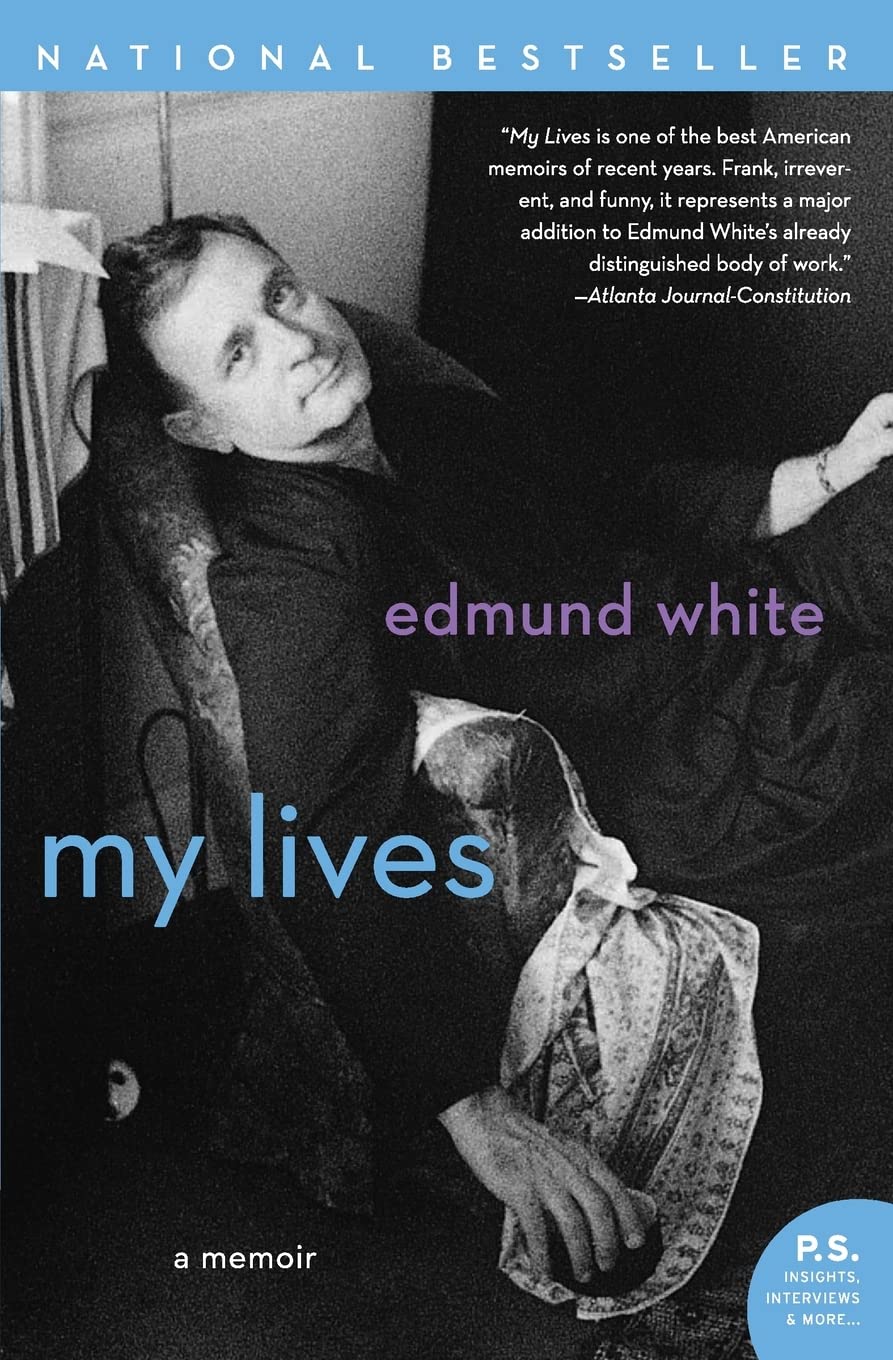
“This is Edmund White’s best book by far, and a classic of emotional intelligence and generosity. . . . My Lives subsumes and concentrates all his other work.”—Daily Telegraph (London) No one has been more frank, lucid, rueful and entertaining about growing up gay in Middle America than Edmund White. Best known for his autobiographical novels, starting with A Boy's Own Story , White here takes fiction out of his story and delivers the facts of his life in all their shocking and absorbing verity. From an adolescence in the 1950s, an era that tried to "cure his homosexuality" but found him "unsalvageable," he emerged into a 1960s society that redesignated his orientation as "acceptable (nearly)." He describes a life touched by psychotherapy in every decade, starting with his flamboyant and demanding therapist mother, who considered him her own personal test case -- and personal escort to cocktail lounges after her divorce. His father thought that even wearing a wristwatch was effeminate, though custodial visits to Dad in Cincinnati inadvertently initiated White into the culture of "hustlers and johns" that changed his life. In My Lives , White shares his enthusiasms and his passions -- for Paris, for London, for Jean Genet -- and introduces us to his lovers and predilections, past and present. "Now that I'm sixty-five," writes White, "I think this is a good moment to write a memoir. . . . Sixty-five is the right time for casting a backward glance, while one is still fully engaged in one's life." “White the humane observer and eloquent stylist can make you stand up and cheer.” - The Oregonian (Portland) “These gracefully written pieces . . . engage the intellect, the emotions and even that part of us that responds to name-dropping.” - Publishers Weekly (starred review) “My Lives is beautifully written, movingly told and painfully honest. It reaffirms White’s well-deserved reputation as America’s Marcel Proust.” - Andrew Biswell in Scotland on Sunday “ My Lives is a brave book because White lets it all hang out.” - Rocky Mountain News “Delicious reading...the story of White’s life is fully engrossing.” - Boston Sunday Globe “The great strength of My Lives is its ruthless honesty.” - San Francisco Chronicle “One of the most brilliant and distinguished authors at work in America today.” - Patrick McGrath “White’s grace and intelligence as a writer are evident.” - Los Angeles Times Book Review “Edmund White gave up drinking, smoking, and Paris, too, despite which he’s writing better than ever.” - Harper's Magazine No one has been more frank, lucid, and entertaining about growing up gay in Middle America than Edmund White. Best known for his autobiographical novels, starting with A Boy's Own Story , White here takes fiction out of his story and delivers the facts of his life in all their shocking and absorbing verity. In My Lives , White shares his enthusiasms and his passions, and he introduces us to his lovers and predilections. Edmund White was the author of the novels Fanny: A Fiction , A Boy's Own Story , The Farewell Symphony , and The Married Man ; a biography of Jean Genet; a study of Marcel Proust; and, a memoir, My Lives . Having lived in Paris for many years, he settled in New York, and taught at Princeton University. My Lives A Memoir By Edmund White Harper Perennial Copyright © 2007 Edmund White All right reserved. ISBN: 9780060937966 Chapter One My Shrinks In the mid-1950s, when I was fourteen or fifteen, I told my mother I was homosexual: that was the word, back then, homosexual , in its full satanic majesty, cloaked in ether fumes, a combination of evil and sickness. Of course I'd learned the word from her. She was a psychologist. Throughout my early childhood, she'd been studying part-time for a master's degree in child psychology. Since I was not only her son but also her best friend, she confided everything she was learning about me -- her live-in guinea pig -- to me. For instance, I was enrolled in an 'experimental' kindergarten run by Dr. Arlett, my mother's mentor in the department of child psychology at the University of Cincinnati. Dr. Arlett, however, decided after just one semester that I was 'too altruistic' to continue in the school. I was dismissed. I suspect that she meant I was weirdly responsive to the moods of the female teachers-in-training, for whom I manifested a sugary, fake concern, just as I'd learned to do with my mother. No doubt I was judged to be an unhealthy influence on the other kids. But my mother, who chose against all evidence to interpret my vices as virtues, my defeats as victories, decided that what Dr. Arlett really meant was that I was too advanced spiritually, too mature, to hang back in the shallows with my coevals. My reward was a return to loneliness. We lived at the end of a lane in a small, rented Tudor house. My older sister, who disliked me, was attending Miss Daugherty's School for Girls; she sometimes bro