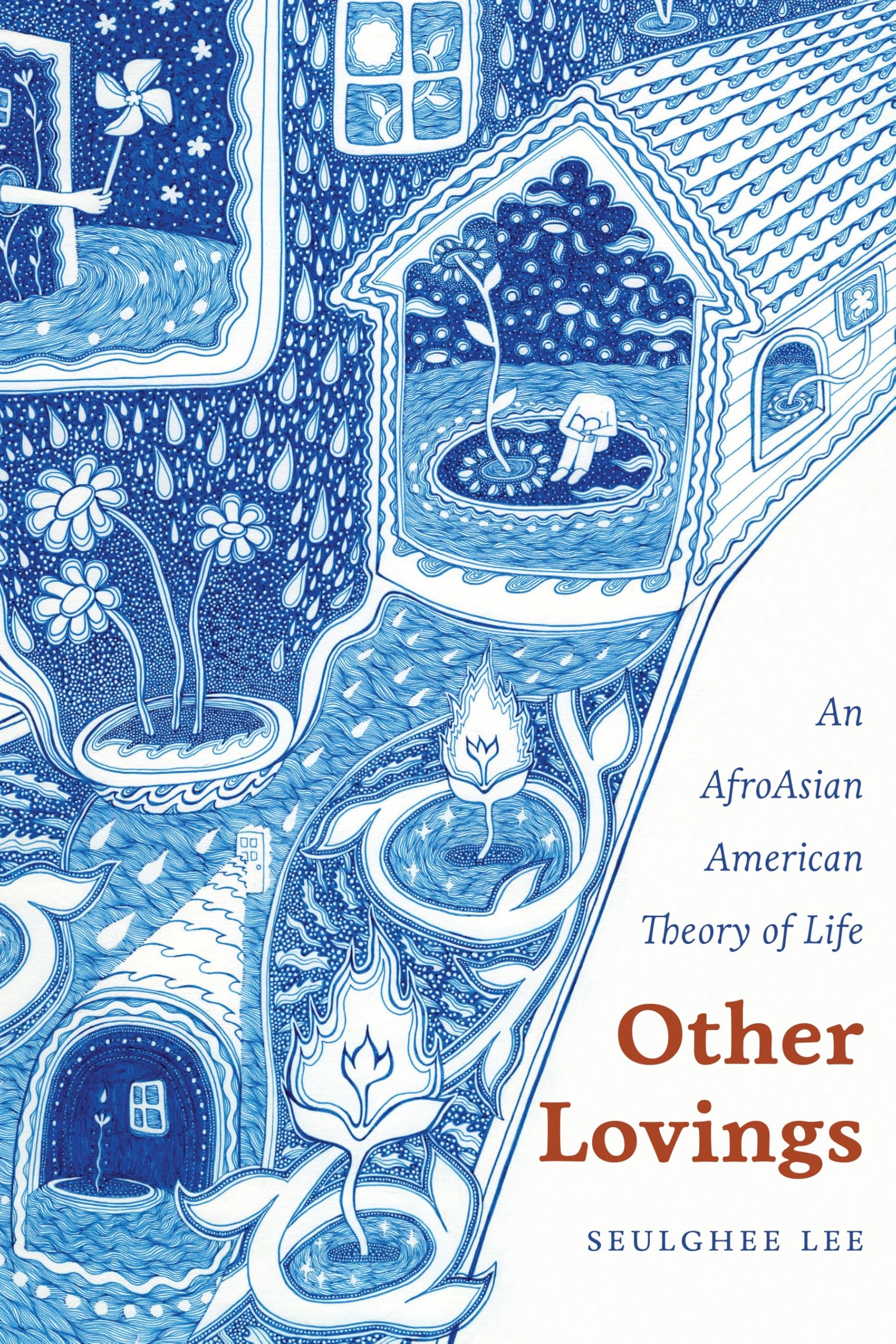
In Other Lovings , Seulghee Lee traces the presence and plenitude of love embedded in Black and Asian American literatures and cultures to reveal their irreducible power to cohere minoritarian social life. Bringing together Black studies, Asian American studies, affect theory, critical theory, and queer of color critique, Lee examines the bonds of love in works by Amiri Baraka, Audre Lorde, David Henry Hwang, Gayl Jones, Fred Moten, Adrian Tomine, and Charles Yu. He attends to the ontological force of love in popular culture, investigating Asian American hip-hop and sport through readings of G Yamazawa, Year of the Ox, and Jeremy Lin, as well as in Black public culture through bell hooks, Martin Luther King Jr., and Cornel West. By assessing love’s positive function in these works, Lee argues against critical regimes, such as Afropessimism and racial melancholia, that center negativity. In revealing what Black and Asian American traditions share in their positive configurations of being and collectivity, and in their responses to the overarching logic of white supremacy, Other Lovings suggests possibilities for thinking beyond sociological opposition and historical difference and toward political coalition and cultural affinity. Ultimately, Other Lovings argues for a counter-ontology of love―its felt presence, its relational possibilities, and its lived practices. “Animated by theoretical erudition and historical attunement, Other Lovings is timely and perennial. Lee’s sensitive exploration of the overlapping frontiers between Afro-American and Asian American literatures, the romance of coalition and the labor of solidarity, and love’s fragility and sociality’s renewal is an extraordinary achievement.” ―Fred Moten, author of All That Beauty “ Other Lovings centers the ‘love bonds’ that make up Black and Asian American sociality. Lee thematizes the strongholds of racial melancholia, Afropessimism, and queer negativity in contemporary thought and offers a dazzling theory of the loving, ‘intramural mega-sociality’ of Asian American racial ontology and AfroAsian life.” ―Vivian L. Huang, author of Surface Relations: Queer Forms of Asian American Inscrutability "Essential. Advanced undergraduates through faculty." ―Y. Shu, CHOICE " Other Lovings offers a fresh perspective on African American and Asian American affect theory, critical race theory, and queer discourse....The book is beneficial for scholars in transnational literary and cultural studies, Afro-Asian studies, Afro-Asian American studies, Black studies, and Asian American studies through its original approach to race, gender, sexuality, and love." ―Jia Zhang, MELUS Seulghee Lee (he/him) is Assistant Professor of African American Studies and English at the University of South Carolina. He is coeditor, with Rebecca Kumar, of Queer and Femme Gazes in AfroAsian American Visual Culture. What is the precise relation between a heuristic optimism of collectivity amidst dispossession, necessarily affected in the present, and the futurial notion of an already timeless otherwise love traced through contemporary Black and Asian American social formations? In the current iteration of the discourse of racial being, usually routed toward and defined as its full negation, the capacity and desire for love-being’s presence has been largely elided by our critical idioms, even amidst the explicit talk of being and nonbeing within the Ontological Turn in Black Studies and the explicit thematization of love’s relation to racial subject-formation in Asian American Studies. Yet for such optimism to cohere, it must necessarily be timeless, lasting beyond even their authorial personage. The passing of bell hooks in December 2021 provided a love-soaked reminder, as tragic as such reminder’s occasion was, to frame the possibilities of love bonds and love-being as delimited by what she famously called the all-encompassing system of “white supremacist capitalist patriarchy.” Her public-facing trilogy of books penned at the turn of this century presaged the turn to the discussion of both positive affectability and explicit love-talk in minoritarian discourse in the twenty-first century. For hooks, love was defined as “a combination of care, commitment, knowledge, responsibility, respect, and trust.” All six of these constitutive elements are most often framed as interpersonal choosing, rendering love as primarily a space of personal agency and a mode of conversion. In hooks’s system, love is less a notion of the already always existing and more a question, in echo of Martin Luther King Jr.’s final book— Chaos or Community? Where Do We Go From Here? —regarding the necessity of “an ethic of love shaping the direction of our political vision and our radical aspirations.” Against an anemic understanding of love as standing apart from “our efforts to liberate ourselves and our world community from oppression and exploitation,” hooks sought to resuscitate King’s idio