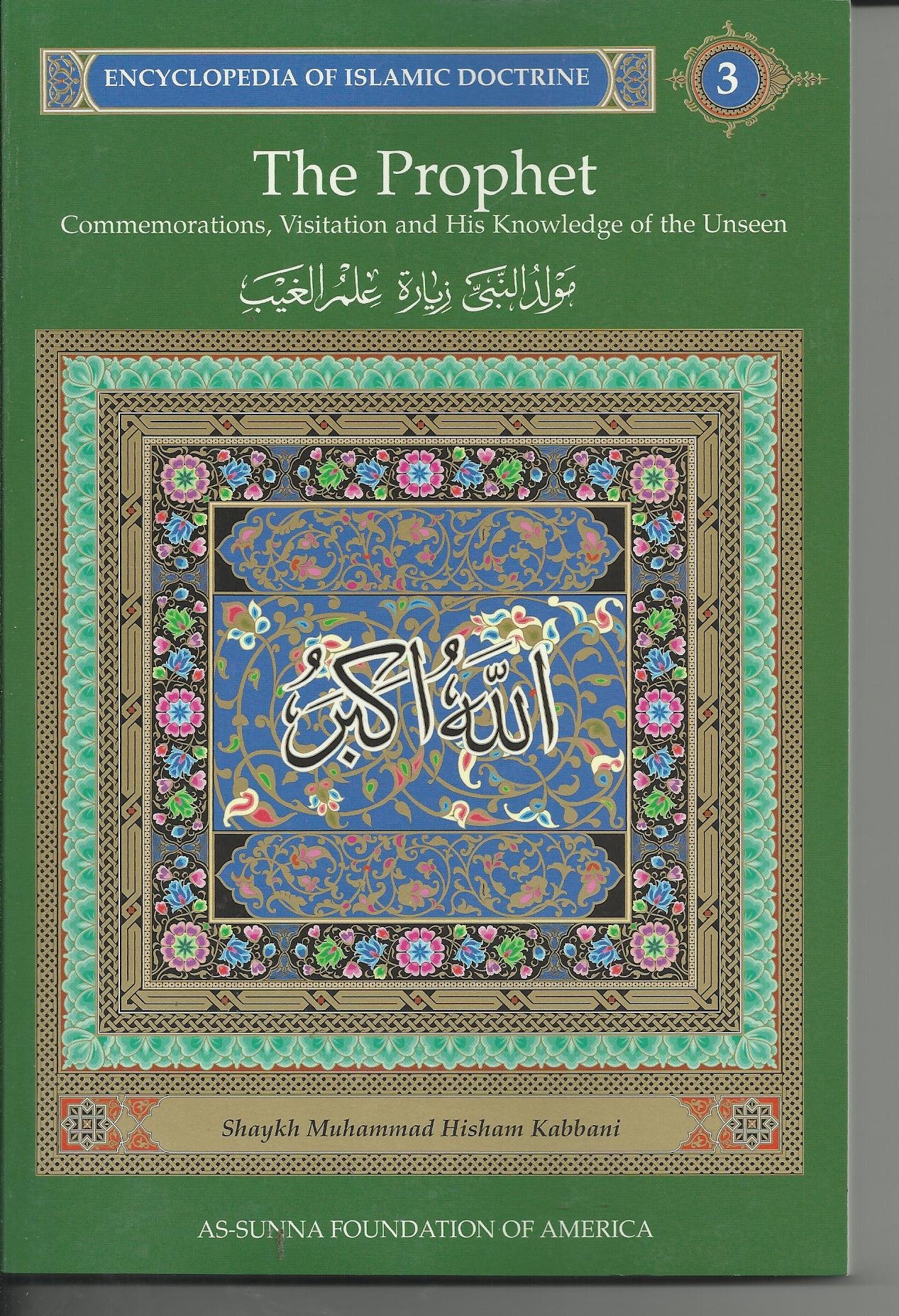
Have you ever wondered: What do the Imams and Scholars of mainstream Islam say about the permissibility of commemorating the Prophet's birghdy (mawlid)? What about the view of a handful of modern Salafi scholars like Albani, Bin Baz, al-Jazairi, Mashhur Salman, Uthaymin and their followers who forbid it on the grounds that it is an innovation? Read the evidence and then decide for yourself. Normative Islam has over the centuries included schools of law, both Sunni and Shiite, schools of thought, both theological and philosophical, and Sufism in its multifarious manifestations. All of these schools and their teachings have together constituted Islamic orthodoxy and tradition understood in the universal sense of these terms. There have been differences of interpretation in nearly every domain from the legal to the theological and philosophical, to the esoteric. And there have been even cases of confrontation as between AshIt remained for modern times for this universal orthodoxy to be attacked not only from without by the forces of modernism emanating from a secularized West but also from within by so called reform movements which in the name of purifying Islam set out to destroy that universal orthodoxy on the basis of their own narrow interpretation of Islam and as a pretext to return to the purity of the salaf or ancestors. Meanwhile, such movements started an aggressive opposition to Sufism, to kalam and philosophy or the whole of the Islamic intellectual tradition, to Shiism, to nearly all the Islamic arts and sciences and even to whatever in the Sunni tradition did not agree with their views, much of which was a veritable innovation (bidah) in the Islamic sense of the term. This opposition from within did much to weaken the Islamic world both religiously and intellectually, making it a great deal easier for the forces of modernism to dominate much of the Islamic world through the process of divide and conquer. During the past half century the tide has begun to turn against this kind of divisive thinking among the most notable Islamic scholars both Sunni and Shiite. Nearly fifty years ago the Shaykh al-Azhar Mahmud Shaltut issued a religious edict (fatwa) about the orthodox nature of the Jafari or Twelve-Imam school of law which began to be taught at al-Azhar from that time onward and at the same time Iranian universities began to teach Sunni law especially of the Shafii and Hanbali schools. Furthermore, many younger educated Muslims, including the majority of the most intelligent and devout, have begun to realize that, far from having been an innovation and deviation, authentic Sufism is the heart of the Islamic message, its tariqah, and the inner force that had preserved Islam in the face of the onslaught of various alien ideas upon the Muslim mind and the soul to this day. But the effect of the divisive forces of so-called reform has not abated. On the contrary, armed with newly gained wealth and worldly power, these forces have tried to gain domination and achieve now what they were not able to do so as long as the Ottomans ruled over much of the Islamic world. Many young Muslims, not to speak of non-Muslims who wish to learn about Islam, are thereby misled by books produced by these movements all over the globe, books which denigrate the whole of Islamic history and its achievements, charge this or that group of Muslims with infidelity and dismiss or belittle the greatest traditional , thinkers and saints of Islam, creating as a result a vacuum which is then filled with the crassest forms of secularism and scientism. We therefore witness today a number of people who are pious a few hours a week and the rest of the week think in a world divorced from the sacred intellectual and artistic universe created by Islam. Consequently, while being opposed to modernism on a certain level, those affected by this so-called reformist outlook join modern secularists in their attitude towards science, the arts and even daily piety not to speak of the inner life and spirituality. The present work by Shaykh Hisham Kabbani has the great virtue of restating traditional and orthodox Islamic teachings without any compromise with either modernism or so-called reformism. Rooted in the traditional interpretations of the Shariah and schools of Islamic theology as well as the Naqshbandiyyah Order which has carried the barrier of a strictly orthodox interpretation of Sufism over the centuries, these volumes reflect the views of the greatest authorities in Islamic doctrine during Islamic history. The author brings vast scholarship, which can only be mastered in the traditional ambiance, to bear upon every discussion that he carries out from the nature of God to various conditions for the daily prayers. Each volume is devoted to a particular set of beliefs starting naturally with the aqaid or doctrines concerning the meaning of tawhid and God's Attributes. The later volumes include elements of Islam's praxis that are well kno