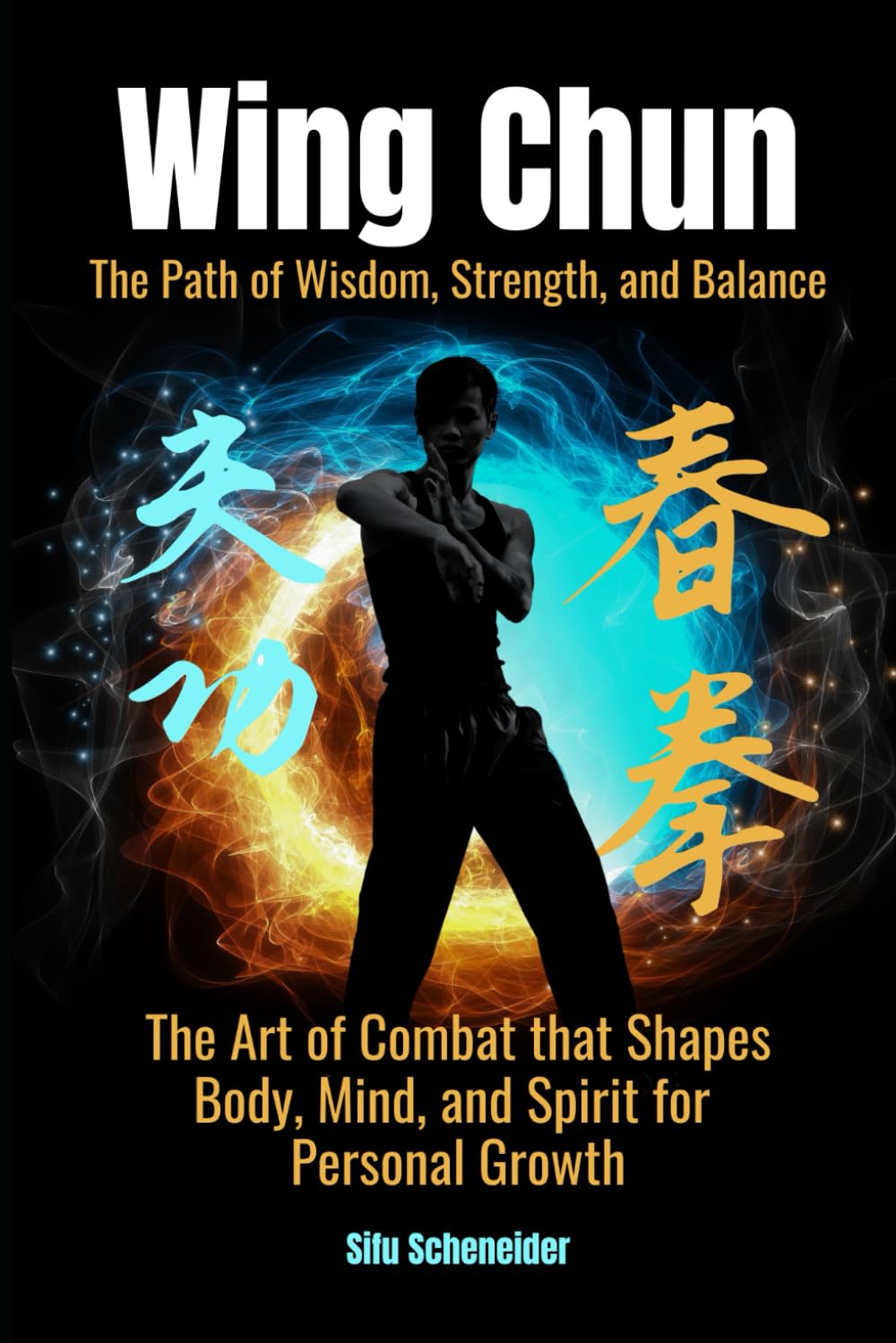
Wing Chun: The Path of Wisdom, Strength, and Balance – The Martial Art that Shapes Body, Mind, and Spirit for Personal Evolution Author: Sifu Scheneider The book Wing Chun: The Path of Wisdom, Strength, and Balance explores the Chinese martial art Wing Chun as a complete system that transcends physical combat and offers a path of self-awareness, personal evolution, and balance between body, mind, and spirit. Written by the renowned Sifu Scheneider, the work presents both the technical and philosophical aspects, as well as the practical benefits this art can bring to practitioners in their daily lives. Structure of the Book Part I – The Fundamentals of Wing Chun In the introduction, the author contextualizes the origin of Wing Chun, explaining its creation by Ng Mui, a Buddhist nun, and how it was designed to be efficient and accessible. The reader is introduced to the philosophy of the art, which emphasizes economy of movement, softness over brute strength, and the intelligent use of energy. The initial chapters detail fundamental principles, such as the central line, the economy of movement, and the concept of efficient self-defense, which is based more on strategy than physical strength. Sifu Scheneider emphasizes that Wing Chun is both a martial art and a tool for personal transformation. Part II – Techniques and Structure of Wing Chun The author provides a detailed explanation of the three main forms of Wing Chun – Siu Nim Tao, Chum Kiu, and Biu Jee – and how they integrate into training with the Muk Yan Jong (Wooden Dummy). Each form is analyzed not only in technical terms but also in its philosophical and practical application. Chapters are dedicated to specific aspects of training, such as the development of sensitivity through Chi Sau (Sticky Hands) and the importance of body alignment and structure for generating force. Sifu Scheneider also addresses the use of traditional Wing Chun weapons, such as the long pole (Luk Dim Boon Kwun) and the butterfly knives (Baat Jaam Do), as an extension of the martial philosophy. Part III – Wing Chun in Modern Life The book highlights how Wing Chun adapts to the needs of the modern world, being a valuable resource for self-defense, well-being, and stress management. Sifu Scheneider argues that the principles of the art – such as space control, balance, and mind-body connection – can be applied to overcome daily challenges and promote personal growth. Central Messages Balance and Wisdom: Wing Chun is described as a tool for cultivating internal balance and practical wisdom, teaching practitioners to remain calm in high-pressure situations. - Intelligent Self-defense: The work emphasizes the efficiency and simplicity of Wing Chun as a combat system, highlighting its applicability for people of all ages and fitness levels. - Personal Transformation: Sifu Scheneider argues that Wing Chun is a path for spiritual and mental development, shaping not only the body but also the mindset of the practitioner. Wing Chun: The Path of Wisdom, Strength, and Balance is a work that combines the historical and philosophical richness of Wing Chun with modern insights into its practical application. Sifu Scheneider presents a comprehensive guide for those wishing to explore this martial art as a way of life, blending ancient wisdom and contemporary evolution. Ideal for both beginners and experienced practitioners, the book is an invitation to embark on a journey of self-awareness and transformation.