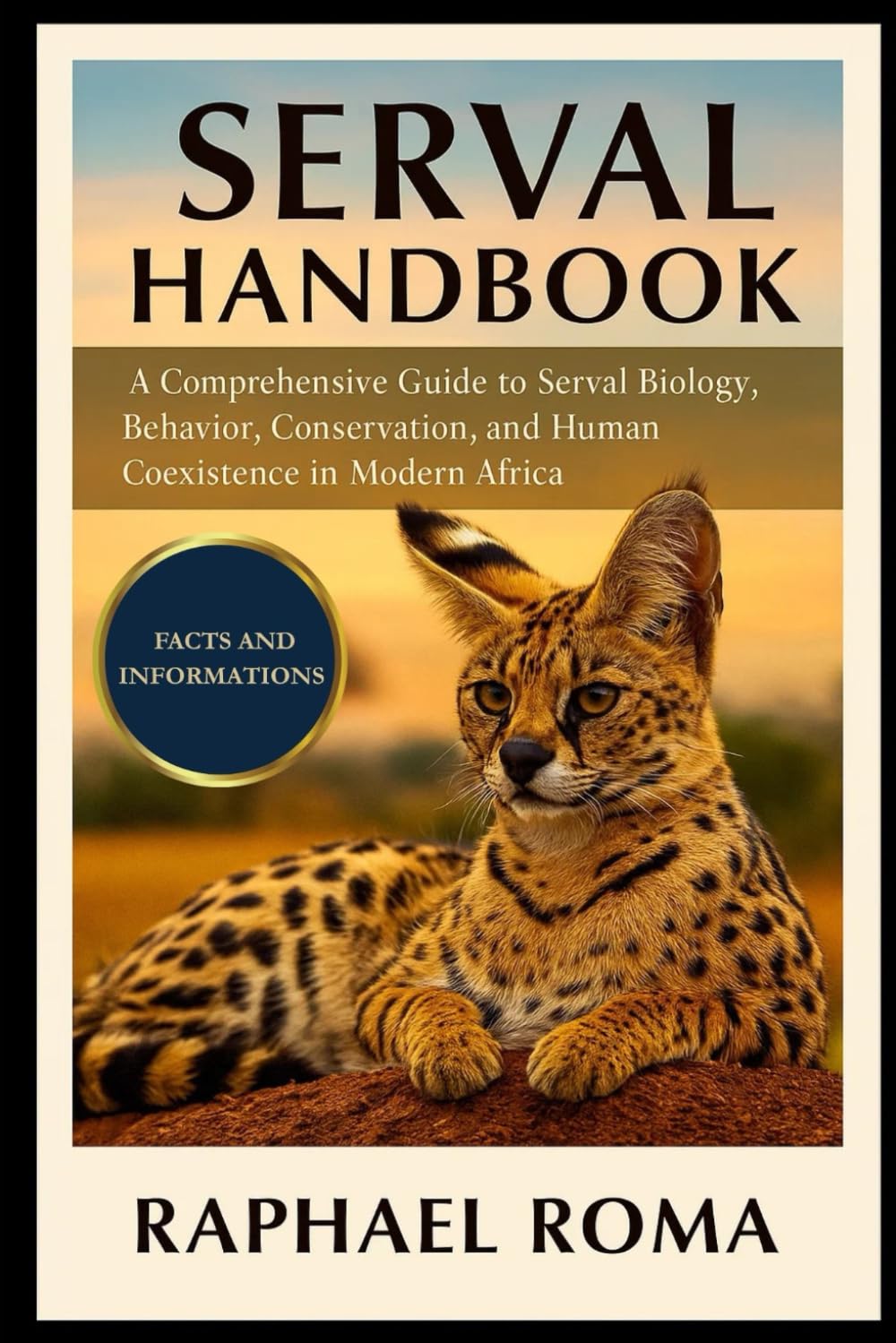
The Serval Handbook is a definitive and visionary exploration of Leptailurus serval —Africa’s elegant, long-limbed wildcat whose beauty, intelligence, and ecological importance have captivated scientists and wildlife enthusiasts alike. Merging cutting-edge research with cultural insight, this comprehensive guide examines the serval’s evolutionary origins, anatomy, ecology, and the dynamic relationship it shares with humanity. Readers will uncover the serval’s intricate biology—its adaptive physiology, high-leaping hunting techniques, and fine-tuned sensory systems that make it one of nature’s most efficient mid-sized predators. Through rigorous scientific analysis, the book explains how this remarkable species maintains ecosystem balance across wetlands and grasslands, controlling rodent populations and serving as a key ecological indicator. Beyond biology, the Serval Handbook delves into the species’ cultural and artistic heritage , tracing its role in African mythology, folklore, traditional art, and modern photography. It reveals how ancient symbolism of vigilance and grace has evolved into contemporary admiration, inspiring conservation storytelling, art, and ecotourism initiatives across the continent. The later chapters spotlight technological and scientific innovations reshaping serval research: AI-assisted camera traps, drone-based habitat mapping, eDNA sampling, bioacoustic monitoring, and machine-learning habitat modeling. Readers will learn how these advancements integrate with traditional field methods to monitor populations, restore ecosystems, and predict future distribution under climate change. At its heart, the book champions coexistence and ethical stewardship —presenting forward-looking strategies for sustainable human–wildlife harmony. Topics include community-based ecotourism, citizen science participation (via iNaturalist, GBIF, and EarthRanger), habitat conservation, and compassionate welfare principles that respect both individual animals and the ecosystems they inhabit. By weaving together science, technology, ethics, and indigenous knowledge, the Serval Handbook offers a holistic understanding of one of Africa’s most graceful predators. Whether you are a wildlife researcher, conservationist, zoology student, or simply a lover of nature, this book will expand your appreciation for the serval’s role in the tapestry of life—and inspire a renewed commitment to protect it for generations to come. Inside you will discover: The serval’s evolutionary lineage and genetic relationships within the Felidae family. - Anatomy, physiology, and adaptations for high-efficiency hunting. - Behavioral ecology, communication, and social dynamics revealed through telemetry and field studies. - Modern husbandry standards, enrichment design, and health management in captivity. - Insights into hybridization, the Savannah cat phenomenon, and ethical breeding practices. - Cultural representations of the serval in African art, ritual, and mythology. - Conservation technologies—AI, drones, eDNA, and bioinformatics—in serval research. - Community-based conservation models, climate-adaptive habitat strategies, and transboundary cooperation. Richly educational and profoundly inspiring, Serval Handbook stands as both a scientific reference and a moral compass for the future of wildlife conservation—reminding us that coexistence is not only possible, but essential to the survival of all life on Earth. Perfect for: Wildlife biologists • Zoology students • Conservation educators • Animal behaviorists • Ecotourism professionals • Nature writers • Ethical pet advocates • Anyone inspired by the beauty of Africa’s wildcats.